
Gigi Langer

Worry Less Now!

 Love More Now!

THE DREADED “SHOULDS”

How often do the words should, must, or ought go through your mind?”

For example:

  • My daughter should stop using drugs.
  • This person, (fill in the blank), must be nicer to me.
  • The mayor (or president, legislator, etc.) is wrong and ought to (fill in the blank).
  • I should be healthy and happy and never experience troubling situations.

Unenforceable Rules

According to Fred Luskin, director of the Stanford University Forgiveness Project, these “shoulds” are examples of unenforceable rules: They demand an outcome you believe must come true, but over which you have no control. Such inflexible beliefs make us helpless, angry, hurt, hopeless or bitter.

Although holding an unenforceable rule may feel good–even noble–it doesn’t mean you can make it happen. In the first example, the daughter should stop using drugs, but no matter how persuasive the mother’s arguments, she doesn’t have the power to make her daughter stop.

The mother does, however, have control over her own choices and behavior. She can seek help from a therapist or Al-Anon, and claim a positive power to work in the situation. Then she might choose a goal for how she wants to act and feel, detach from the result, and use growth tools for her own peace of mind, regardless of her daughter’s choices.

Overcoming My Own “Shoulds”

One of my own unenforceable rules became clear as I was writing this book. When my mother passed away, I found it difficult to write and became discouraged by my lack of progress.

When I honestly faced the belief that I must complete the book by a certain date, I became willing to see it differently. After using Tool 6, Is It True? I turned my whispered lie around to “I will finish writing the book at the perfect time.” In turn, I became more flexible and kinder with myself.

The essence of happiness is peacefully allowing life to unfold. Nothing becomes a live-or-die situation because you know your loving power is working things out, with results that may far surpass your greatest hopes.

(Excerpt taken from page 56-57 of Gigi Langer’s award-winning book, 50 Ways to Worry Less Now)

Worry Less Now; Gigi Langer

Gigi Langer holds a PhD in Psychological Studies in Education from Stanford University. She is a seasoned author and popular speaker who has helped thousands of people improve their lives at home and work. Gigi hasn’t had a drug or drink for over 30 years, although she does occasionally overindulge in Ghirardelli chocolate and historical novels.

Worry Less Now by Gigi Langer

Her book, 50 Ways to Worry Less Now (available HERE in paperback, e-book, & audiobook) has gained rave reviews (4.8 on Amazon) and a publishing award.

WATCH US ON “BIZZY LIVING SOBER”

This is such a cool video podcast for recovering people! It’s a lot of fun and so helpful to anyone struggling with substance abuse.

Thanks to Bizzy for our conversation about how to stay sober in spite of our STINKIN thinkin!

📣 Here it is! Click on the link, not the photo 😘

http://busylivingsober.com/podcasts/2020/7/9/episode-183-author-gigi-langer

Elizabeth L. “Bizzy” Chance, CRS, is the founder and owner of Busy Living SoberTM, a network dedicated to bringing addiction out of the shadows and educating society that addiction is a disease, not who you are. She is a leading expert in the field of recovery management, widely known for her work as a consultant, family coach, and her social media presence. 

Elizabeth earned her certification as a Certified Recovery Specialist (CRS) from the state of Pennsylvania. She is a graduate of George Washington University with a degree in communications, and her work experience includes time at QVC and CBS Television. 

Elizabeth is in long-term recovery herself over a decade. Hence, she feels able to form a compassionate and meaningful bond with addicts. She has always gravitated towards anyone new to recovery because of her own personal story,  which gives her an innate sense for helping them achieve and maintain recovery. 

Busy Living SoberTM is to eliminate the shame of addiction through open and honest communication. 

Elizabeth currently resides in Wayne, Pennsylvania with her husband and three teenage children. 

“The definition of addiction is the inability to control one’s use over a substance.”

CELEBRATE INDEPENDENCE FROM NEGATIVITY!

worry less now

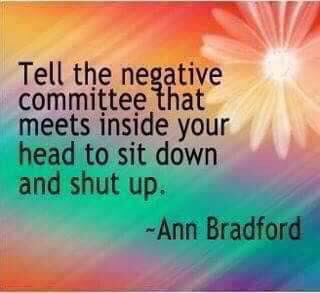
My friends say our worries & fears come from the not-so-helpful “committee in my head.” I call those negative voices “whispered lies.”

For instance, for too many years I believed “If I want to be liked, I must look good.” This whispered lie made me constantly worried about my appearance and behavior.

A few more examples include:

  • “I’ll never have enough money.”
  • “I always sabotage my success.”
  • “Relationships just don’t work for me.”
  • “We could all be happy if only Dad would stop drinking.”

Although many of our whispered lies concern ourselves, they often focus on our children, spouses, friends, or relatives—for instance, the last example about the father’s drinking.

Other distressing beliefs involve institutions, as in “If the government would just change this policy, we’d all be better off.”

Even though it might be true that Dad ought to stop drinking or the government should make changes, these events have no control over your own happiness.

You can find peace of mind under any circumstance because you’re in charge of what you think about.

Most of our worries are fueled by false stories installed into our minds long ago, just waiting for opportunities to be confirmed.

Wayne Dyer wrote that everything our brain “knows” is based on past experiences. Therefore, when an event resembles—even in a small way—an old painful one, our mind interprets the new event according to the long-standing negative belief.

Since most whispered lies live largely in our subconscious, we’re often unaware of them.

To illustrate the power of my own “negative committee’s” lies, consider why I failed at romantic love so many times during my twenties and thirties. I wanted to believe that love was possible for me, but my past had taught me the lie “I’m not worthy of love.”

This belief lived so strongly in my mind that, even when a man loved me deeply, I couldn’t believe it was true. After several months, I would become convinced that he wasn’t fulfilling my needs. These worries made me so demanding that I soon snuffed out all the happiness and joy of new love. When it ended, I’d tell myself, “I just don’t deserve love!”

Until I got honest and started healing my faulty thinking, I had no hope of enjoying a happy relationship. I’m so grateful for the therapy, recovery, psychological strategies, and spiritual tools that gave me freedom from my false beliefs.

As a result I’m a pretty happy camper most days — AND I’ve been happily married for 31 years. So what if it’s my 4th husband??? He’s fabulous!

To learn how to win independence from your own committee’s whispered lies, check out my award-winning book 50 Ways to Worry Less Now (Amazon 5 stars), Audiobook, and Ebook HERE https://gigilanger.com/buy/

HOW TO CALM YOUR OVERACTIVE MIND

I have a tendency to overthink things. You might too.

Your mind takes off and starts imagining the worst things that could happen in the future, or you find yourself looking back at the recent past and regretting your words or actions. Even worse is when we get caught up in judging and resenting the actions of an important person in our lives. 

Here are a few tools I use to anchor my mind in the present moment rather than in the future or past. 

 THE 5,4,3,2,1 TECHNIQUE  (Full blog post:  https://gigilanger.com/anxiety-attack/)

Take a few slow belly-inflating breathes and remind yourself that your body is right here right now, and you can choose to focus your mind on the present moment rather than on the future or past. .

1. Name 5 things you can see around you (Examples: rug, painting)

2 . Name 4 things you can feel (feet on the floor, cool air on the skin)

3 . Name 3 things you can hear right now (a fan running, people’s voices outside)

4. Name 2 things you can smell right now (perfumed soap)

5. Name 1 good thing about yourself (“I am strong,” “I can help myself through this.”)

If you simply can’t focus, or if your body and mind haven’t yet settled down, take a few more belly-inflating breaths, and tell yourself that you can focus your thoughts on the present moment. Then do the exercise again.

It may take several minutes of repetition before your mind settles down.

According to independent.co.uk, “the trick, which relies on sensory awareness, is rooted in mindfulness – and apart from anxiety, it can help treat depression, addiction disorders, lower blood pressure, and relieve stress” (Harvard University Helpguide.org)

MINDFULNESS TRAINING 

It really helped me to take the “Mindfulness Based Stress Reduction” (MBSR) 8-week course. It uses breathing and simple stretches to keep your mind on your body, and its research studies show impressive results (Jon Kabat-Zinn and colleagues from  University of Massachusetts Medical Center). More info here: Mindfulness-based stress reduction – Wikipedia   Really effective.

MIND REFOCUSING 
I often catch my mind worrying about the future, and when I notice this I substitute a quick little phrase to anchor me back into the now: “All is well right now.” or, “Help me to see this differently.” Also repeating a short prayer like the Serenity Prayer helps a lot.

The idea is to substitute a “right now” thought or sensation for our worries, fears, and stressful thoughts.

NOTE: In my experience, I often need to make the switch several times an hour (sometimes many times a minute!)

It will take consistent practice to retrain your mind to stay in the present. Keep at it and your life and health will improve.

Gigi Langer, a person in recovery, holds a Ph.D. in Psychological Studies in Education and an MA in Psychology from Stanford University. Through her writing, coaching, and speaking, Gigi has helped thousands of people improve their lives at home and at work. She lives in Michigan with her husband and Murphy, her cat.

Get Gigi’s new book, “50 Ways to Worry Less Now: Reject Negative Thinking” is available in audio, e-book, and paperback (5 Stars on Amazon). Click HERE

“Valuable, heartfelt manual.” — Publishers Weekly (BookLife)

“This book is a winner.” -Karen Casey, Hazelden author