Gigi Langer

Worry Less Now!

 Love More Now!

FEELINGS ARE NOT FACTS!

DO YOU HAVE FEELINGS THAT JUST CARRY YOU AWAY AND COLOR YOUR WHOLE WORLD GRAY? Don’t worry! Such feelings are often created by fearful thoughts that aren’t even true.

For example, we live in the wreckage of our future (“Its going to be awful!”) or we create “unenforceable rules” (“This should (or should not happen”). Often, we try to change the past by thinking how it “could have” been better.

Such thoughts are driven by the fear-driven belief that, if we just think long and hard enough, we can protect ourselves (and our loved ones) from pain and harm.

SO, HERE’S THE TRUTH: We don’t have the means to make people and things exactly as we want them. We just aren’t that powerful.

AND, HERE’S THE GOOD NEWS: We can find peace of mind and contentment in the midst of our fearful feelings and thoughts. Why? BECAUSE WE CAN CHOOSE WHAT FILLS OUR MIND.

HOW? Meditation, walks outside, stretching, yoga, prayer, reading or watching inspiring books/movies, spiritual practices, energy work, and thought-correction can all soothe our most difficult feelings. Good healthy friends or counselors really help too.

When we get still and listen to our inner wisdom (or that of another), we receive the comfort of ACCEPTANCE (non-attachment to specific outcomes). Further, we find ways to address those problems that still bother us—IF they are still bothering us (quite often, they’ve shrunken down to nothing!).

NEXT TIME YOUR FEELINGS are having a hissy fit, stand apart from them for a moment to recognize they’re mostly a result of inaccurate and disturbing thoughts. Then, ask yourself, “What healthy actions can I take to soothe my mind and body?” And then, do that!

PLEASE SHARE YOUR FAVORITE WAYS OF SOOTHING UPSET FEELINGS IN THE COMMENTS SECTION. THANKS!!

Worry Less Now; Gigi Langer

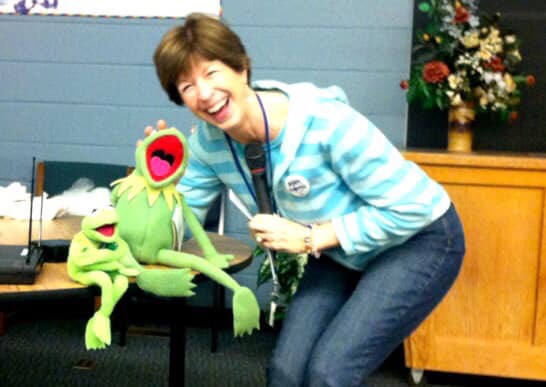
Gigi Langer, PhD. Many years ago, I used alcohol, romance, and professional accomplishments to soothe my frayed nerves. When I quit drinking, I was left with only my fears and worries. Over time, I discovered effective tools from therapy, recovery pro­grams, scientific research, and a variety of philosophical and spiritual teachings.

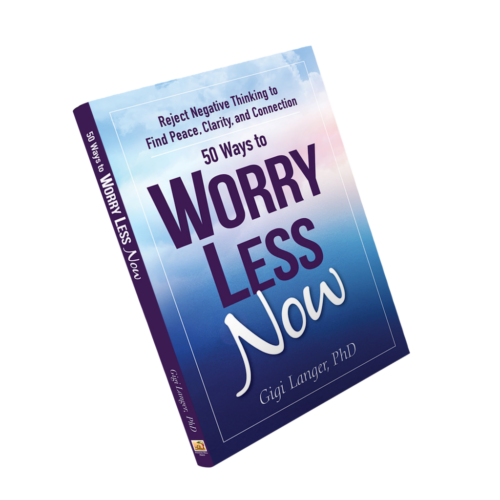
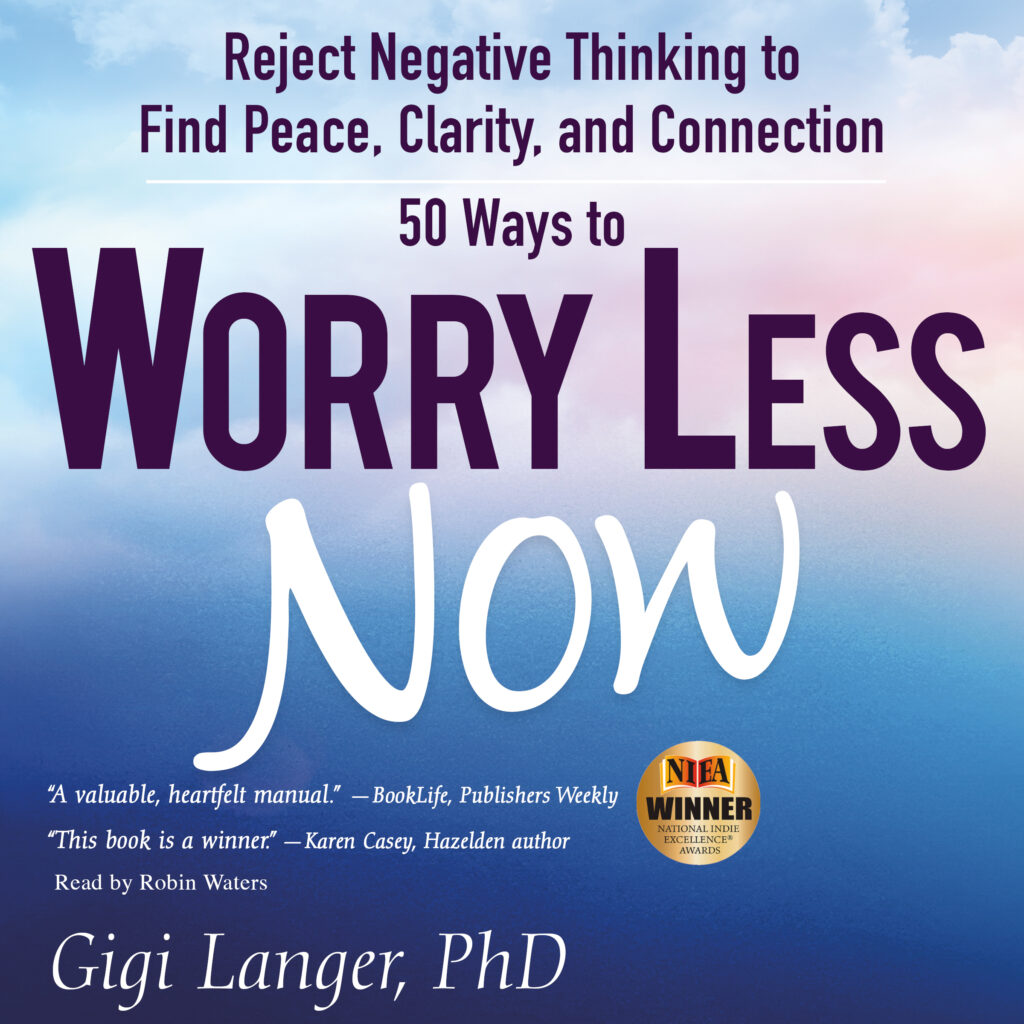
My award-winning book, 50 Ways to Worry Less Now describes how I and others have defeated the faulty thinking leading to dysfunctional relationships, perfectionism, addiction, and worry about loved ones. It contains practical strategies with directions, personal stories, and other helpful suggestions. Amazon: 4.8 stars (48 reviews) (Buy Paperback, e-book, OR audiobook HERE)

Karen Casey, best-selling author of Each Day a New Beginning (Hazelden) “Even though I have been in recovery for more than 4 decades, and didn’t think another self-help book would make it to my treasured list, I was wrong. This book is a winner.”

You vs. Your Dysfunctional Family: Secrets to Healing

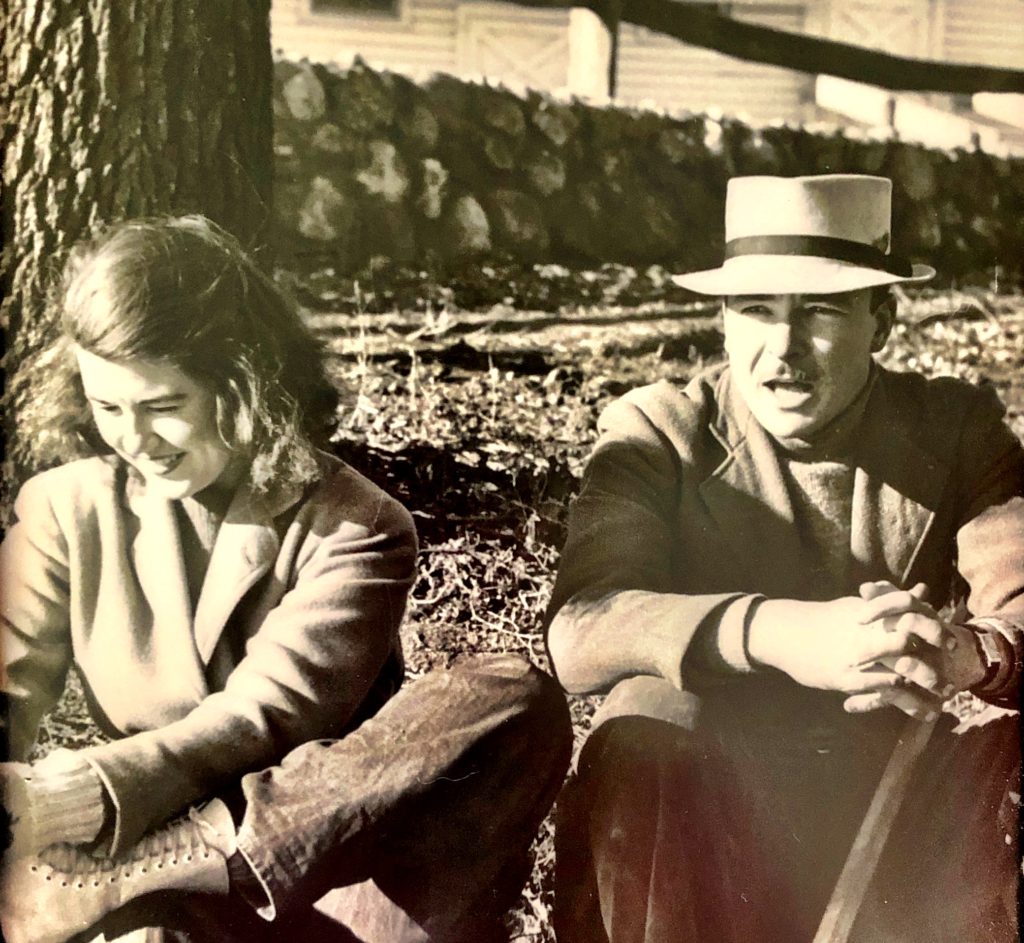
My Mom & Dad Married 9/14/1939 Cece and Ted Mohlman

If you grew up in a dysfunctional family, my story will be familiar. I only hope that you’ve found the people and programs to help you heal. Here’s how I began to grow out of the negative thoughts and worries from my childhood. (Excerpted from 50 Ways to Worry Less Now.)

My Mom and Dad: “Doin’ the Best They Can”

I was the fourth child of a charming, alcoholic father and a mother who spent her life worrying about him. Many evenings we’d find Mom lying alone on her bed reading a book, gloomy and sad as she listened for the crunch of Dad’s car tires on the driveway. Too often, that sound never came and she sank lower and lower into her sadness.

Partying with friends was the mainstay of my parents’ lives. The stereo got louder and louder as the drinks got stronger and stronger. Some nights, after the guests had left, we were awakened by crashes and Mom’s screams. I lay frozen in my bed as the whispered lie “I’ll never be safe” sank into my bones.

What Is A Dysfunctional Family, Anyway??

In alcoholic and other dysfunctional families, the dominant messages are: Don’t feel, don’t trust, and don’t tell anyone about it. The “it” is the proverbial “elephant in the room”; although everyone is aware of it, they quickly deny it.

In the absence of honest communication about my dad’s drinking, we children began to invent stories to explain the swirling tension in the air. I birthed a new whispered lie: “I must be a bad person if my parents won’t give me time or attention.”

Family alcoholism isn’t the only condition that can stunt a child’s sense of security and worth. Any trauma that causes ongoing despair can become the elephant in the room: death of a family member, physical impairment, mental illness, gambling, drug addiction, violence, chronic illness, foster care, sexual abuse, or neglect. In such cases, the troubling situations consume the family’s attention, and the emotional needs of the children often go unmet. These deficits launch the child on a lifelong search for love and safety without a road map.

According to Janet G. Woititz’s Adult Children of Alcoholics and Tian Dayton’s The ACoA Trauma Syndrome: The Impact of Childhood Pain on Adult Relationships, adult children of alcoholics and trauma victims tend to share several characteristics

  • Fear losing control; are overly responsible; have trouble relaxing and having fun;
  • Fear their emotions or feelings; confuse pity with love; have difficulties with intimacy;
  • Fear abandonment; constantly seek approval;
  • Self-criticize; have low self-esteem;
  • Deny reality; avoid conflict; adopt a victim mentality; become comfortable living in chaos and drama;
  • Overreact to outside changes; when afraid, see everything and everyone in extremes;
  • Adopt compulsive behaviors; have an attraction to compulsive personalities; and
  • Suffer from frequent physical illness and an accumulation of grief.

Healing Begins (with A Lot of Help from My Friends!)

When I first learned about these tendencies, I felt hopeless. Then I heard these empowering words: I am not to blame for what happened to me as a child; but I am responsible for healing my past. For more information and support, see https://adultchildren.org/

After I got sober in 1986 and the fog cleared, I sought therapy for many of the tendencies that had been screwing up my life. My therapist suggested I attend Twelve-Step meetings called “Adult Children of Alcoholics.” In those meetings, I felt uncomfortable as others talked about experiences similar to mine, but at the same time I felt a giddy sense of relief. I realized I wasn’t alone; and if others had the courage to recover, so could I.

As I continued to work with my therapist, I discovered that I still felt, deep inside, like a defenseless little girl. In an inner-child healing exercise, I visualized locking my mind’s critical voices in a lead-lined vault. I then greeted my imaginary little girl with love and asked if she would talk with me.

As my therapist coached me, I told my inner child I loved her and praised her for being so brave in our crazy home. I thanked her for inventing strategies to keep us secure, and explained that she could let go of her perfectionism and other defenses. Finally, I assured her that she could trust me—her adult self, powered by love—to keep us safe and happy.

These exercises helped me see my divorces and addictions as merely misguided attempts to find love and security. I let go of my self-condemnation and began to believe I could be happy. Since then, I’ve never stopped growing.

An Invitation

If you’ve had experiences similar to those described here, I wish you courage and freedom from the past. I welcome you to comment on your journey of healing. and how your found support. For more information, see https://adultchildren.org/

NOTE: This article is taken from Chapter 5 of my book, 50 Ways to Worry Less Now, which shares the entire story and the tools I discovered as I grew into the happy, healthy woman I am now. This growth has been one of the greatest miracles of my life, but I did not do it alone.

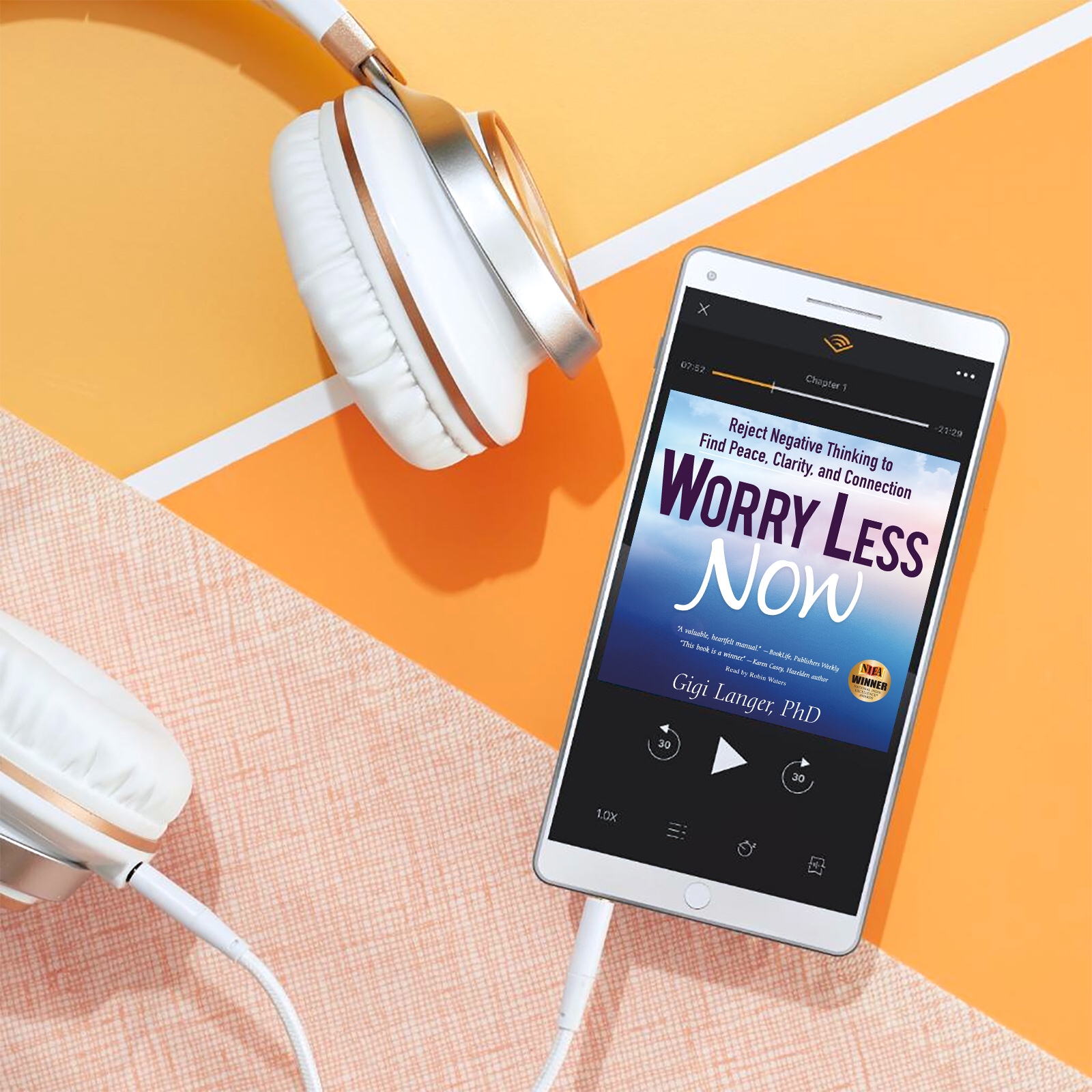
Gigi Langer holds a PhD from Stanford University in Psychological Studies in Education. She’s an award-winning teacher and writer with 33 years clean and sober. Her new book, 50 Ways to Worry Less Now won the National Indie Excellence Award and rates 4.8 stars on Amazon. The AUDIOBOOK is due in mid-September 2019 (Audible, Amazon, i-tunes). Tune in at GigiLanger.com

Free audiobook: WORRY LESS NOW (for first 20 only)

THE BRAND NEW WORRY LESS NOWAUDIOBOOK IS COMPLETE!
Coming soon to Amazon, Audible, and i-tunes.
I WILL SEND YOU A FREE COPY TO REVIEW if you email me at gigilangerworrylessnow@gmail.com.
(Offer applies to the first 20 who respond)

LISTEN TO THE PREFACE << HERE >>

If you’ve read the book, you know it has lots of illustrations and suggested activities. As you might imagine, these don’t come across too well in an audiobook, so i created a “Companion PDF” with all 50 tools, plus space to write responses.

** Can you guess how many pages are in the Audiobook Companion PDF? **

(82)

7 Tips to Stop the Nasty Voice in Your Head

Do you have a voice in your head that incessantly whispers lies of impending doom or replays past events in the hope of changing them?

It might sound like this: “I always…(fail, am rejected, sabotage my success)” OR “If only he or she would (fill in the blank), we would all be okay.“

Although I used to hear this voice often, over the years I’ve learned to turn such negative thoughts into positive ones. Here are a few tips that might help you do the same.

  1. Notice how the voice in your head causes tension in your body and perhaps emotions of anger, pain, frustration, envy, or a need for security, recognition or love.
  2. Stand apart from the thoughts and feelings, as if you’re on a balcony observing them. Do NOT condemn them.
  3. Breathe slowly and deeply until your body calms down. Withdraw your attention from your worrying and focus on your breathing.
  4. Recognize who is watching the thoughts. It’s a part of your mind independent of your thoughts and emotions. This is your true self (higher self, God-mind, etc). It is greater, stronger, and wiser than the imagined disturbances.
  5. Make a choice: Do you want to stay in the drama of the fear-filled voices in your head, or do you want to experience peace and happiness?
  6. Write your mind’s false messages in a journal. Notice that many of them predict one of two horrible things: 1) past pain will repeat itself, or 2) the future will be disastrous. KNOW THAT NONE OF THESE IS TRUE.
  7. Dissolve your mind’s lies by using meditation, affirmations, prayer, therapy, yoga, inspirational reading, groups, energy work, or any other method to connect with the goodness and light of your true self.

As you refuse to believe the fearful voice in your head, sooner or later the answers to your troubles will appear in the most amazing way and for the best of all involved.

HOW DO YOU CALM YOUR OWN NEGATIVE THOUGHTS? I’d love to hear from you!

GIGI LANGER is the former “Queen of Worry” whose award-winning book, 50 Ways to Worry Less Now, rates 4.7 stars on Amazon. She holds a PhD from Stanford University in Psychology in Education.