Gigi Langer

Worry Less Now!

 Love More Now!

DOES YOUR ATTITUDE NEED HEALING?

attitude healing worry less now gigi langer

This book about healing my attitude appeared at a low point in my life, and I am so grateful it did! Having moved to Michigan after grad school to marry my 3rd husband, I had no access to my favorite drug, marijuana.

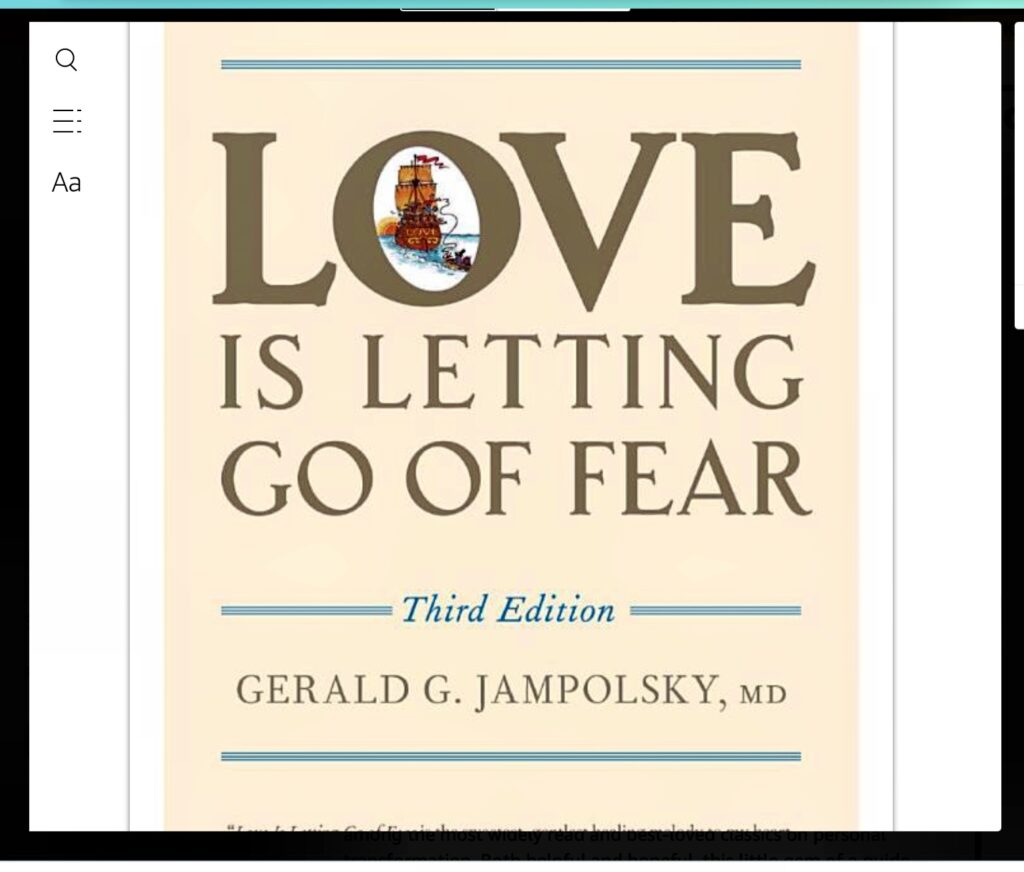
Since my husband travelled for work, I started sneaking out to bars to pick up men and get high. Just in time, my grad school mentor, Jane Stallings, sent me this book: Love is Letting Go of Fear, by the founder of the Center for Attitudinal Healing, Gerald Jampolsky, M.D. Filled with shame, I desperately grabbed onto it and began repeating the ideas, hoping that something could restore me to sanity.

To my astonishment, it did! Within a year, I began therapy, and soon entered recovery. I haven’t had a drink or drug for 37 years; and—miracle of miracles— I’ve been happily married to my 4th husband for 33 years! Doing the work to clean up our own negative attitude is totally worth it!

How Does It Work?

Attitudinal Healing provides support groups for people facing issues such as stress, aging, loneliness, divorce, chronic and life-threatening illness, care-giving of loved ones, bereavement, unemployment, or marriage and parenting problems.

The groups support inner growth, and help members adopt new ways to solve problems and relate to others. By applying the 12 Principles of Attitudinal Healing, one gains new attitudes so they can live in the present moment knowing that, no matter their life circumstances, they can choose to experience either peace or conflict, love or fear.

Principles of Attitudinal Healing

The Principles are not dogma. Spiritual in nature, they are nonsectarian and are offered only as tools for healing one’s attitude. The first Principle is the key: The Essence of Our Being Is Love, as it unites and flows through all the others.

  1. The essence of our being is love.
  2. Health is inner peace. Healing is letting go of fear.
  3. Giving and receiving are the same.
  4. We can let go of the past and of the future.
  5. Now is the only time there is, and each instant is for giving.
  6. We can learn to love ourselves and others by forgiving rather than judging.
  7. We can become love finders rather than fault finders.
  8. We can choose and direct ourselves to be peaceful inside regardless of what is happening outside.
  9. We are students and teachers to each other.
  10. We can focus on the whole of life rather than the fragments.
  11. Since love is eternal, death need not be viewed as fearful.
  12. We can always perceive ourselves and others as either extending love, or fearful and calling for love.

Where Have We See These ideas?

If you’ve you’re familiar with A Course in Miracles, or Twelve-Step programs, you might recognize some common attitudes or beliefs. for example, the importance of giving as a portal to receiving love. The following ideas might also resonate with your experiences.

  • We are spiritual beings having a human experience.
  • Healing and happiness are achieved by letting go of fear.
  • We grow so we can help others grow.
  • Letting go of resentments and criticism are keys to happiness.
  • Peace of mind is merely a choice, independent of external circumstances.
  • Now is the only moment we have, so we avoid living in the future or past.

In my experience, we come to live these truths through regular spiritual practice with love-based Christianity, Buddhism, or other wisdom traditions. I also attended the Attitudinal Healing Facilitator Training, and gained an even deeper understanding of how to apply the principles to live a worry-free life.

The point is to become a love-based person rather than a fear-based person, to give rather than take, and to care about others rather than criticize them. In short, we learn how to treat others as we wish they would treat us. Pretty simple, aye?

I WOULD LOVE TO HEAR FROM YOU! Which of these ideas do you find appealing? Which ones are confusing to you? Just email glanger2202@gmail.com and I will read your thoughts with care & reply.

In my next book (coming out in fall, 2022), I’ll be clarifying many of these ideas and sharing how to apply them to our lives. As writing a new book is such a challenge, I’ll be using many of the ideas stated here to keep a positive attitude. Stay tuned!

gigi langer worry less now

Gigi Langer has been sober 35 years, and holds a PhD in Psychological Studies in Education from Stanford University. Formerly crowned the “Queen of Worry,” Gigi resigned her post many years ago and now lives happily in Florida with her husband, Peter and her cat Murphy.
worry less now gigi langer

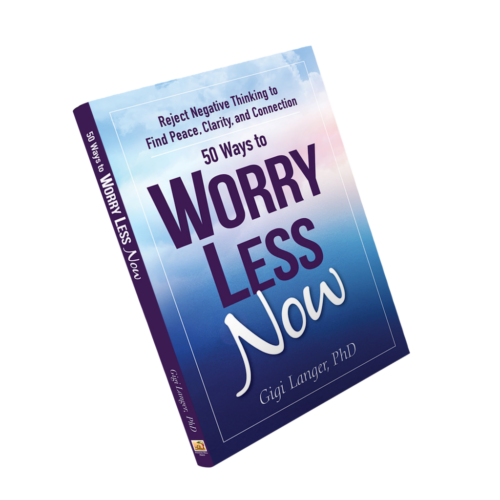
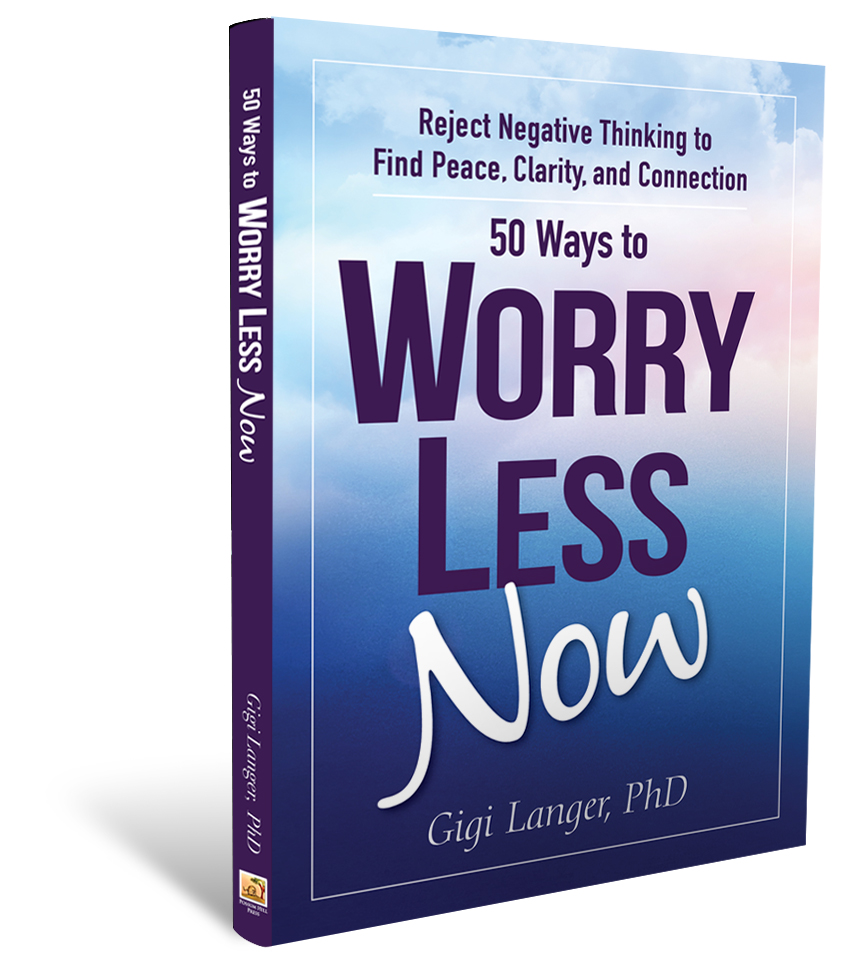
Gigi’s award-winning book, 50 Ways to Worry Less Now, describes how to correct the faulty thinking leading to addiction, dysfunctional relationships, perfectionism, and worry about loved ones. Check out the practical directions, personal stories, and other helpful growth tools. Amazon: 4.8 stars (Buy Discounted, personally signed Paperback with free Workbook PDF HERE)

FIRST LOOK AT MY NEW BOOK, DUE THIS FALL!

You might have heard I’m writing a follow-up to 50 Ways to Worry Less Now. I am so pleased with how it’s coming along, as I’ve completed 4 of the 5 chapters.
* In late May I plan to send it to beta readers for feedback. If you wish to be an advance reader, please email glanger2202@gmail.com. * In the next months, I’ll be sharing short excerpts with you. (Feel free to provide feedback on this snippet on self-limiting patterns.) Thanks for joining the team!

EXCERPT FROM CHAPTER 2: What Patterns Close Our Heart?
 If you’re on a growth path, chances are you’ve discovered some patterns that are bumping up against your dreams of happy relationships, success, or health. For many of us, these patterns have to do with control (referred to as “self-centered fear” in Twelve-Step programs).

The Illusion of Control
In our families of origin, it was all about staying safe, so we formed habits that kept us out of the family chaos. Some children become the high achievers. Others take care of everyone else. Still others get lost in the shuffle, hiding in the corners. Some may deflect tension and conflict with humor or distraction.

All these coping strategies rely on the illusion of control as in the whispered lie: If I do this, I will be safe. And, for many of us, these coping strategies worked pretty well in school, work, and play. But they eventually turn out to be deadly, especially to our relationships.

When we run into life challenges that seem to get worse no matter what we do, it may be spirit’s way of saying it’s time relinquish our old patterns. If we’re awake and connected with healthy advisors and friends, we can unlearn the habits that no longer serve us or our loved ones. 

Gigi’s Old Patterns
In Stage II Recovery, Earnie Larsen outlines six common patterns that sabotage our happiness because they rely on controlling people, places, and things. When I first read the list, I identified as a perfectionist, workaholic, people pleaser, and tap dancer.
-As a perfectionist, I completed an advanced degree at Stanford, but my whispered lies had me in knots of fear of failing which led to drug abuse and promiscuity.
-As a workaholic, I ignored my family and partner by spending all my time studying or working, thus the failed romantic relationships.
-As a people pleaser, I had no idea how to know or state my needs with my loved ones; I was terrified of conflict and just went along, pretending that everything was fine. No wonder I had three failed marriages.
-My tap dancer pattern had me traveling all over the world, leaving a relationship whenever I got bored, and frequently changing jobs and degree programs. I think the first time I didn’t try to skate past a commitment was with my sobriety. 

Inventory: Six Harmful Patterns
Here I list the six patterns with their associated whispered lies. You may immediately relate to some of them. But don’t worry, with help you can change them. 

The Caretaker. Caretakers feel responsible for the happiness of others; and they try to rescue people, often to the detriment of their own self-care. “I can’t be happy if everyone else isn’t okay. I can’t let anyone down; I must make things better.”

The Martyr: Martyrs believe life is a struggle and they’re the victim of an unfair world. They don’t believe they deserve fun or pleasure. “Life will never work out for me. I always lose out, no matter what I do. I can’t handle life.”

The Perfectionist. Perfectionists can’t stand making mistakes, have a low tolerance for unpredictability, and are often critical of others’ incompetence. “Everything has to be perfect for me to be okay. I can fix this if I work hard enough. I hate failure.”

The People Pleaser. People pleasers need to keep everyone else happy; so, they put their own needs last. They have trouble saying no, can’t handle conflict, and often feel hurt. They have little confidence in their own opinions. “For me to be safe, everyone must like me. I can’t object to my (friend’s/partner’s) mean words. I can’t say what I think because people will hate me.”

The Workaholic. Workaholics put the completion of tasks ahead of their relationships. They feel guilty when not working and never feel they have accomplished enough. “I must get it all done, or my life will fall apart. I can’t take time for others; there’s just too much to do.”

The Tap Dancer. Tap dancers constantly test the limits, avoid commitment, and often skirt around the truth. They always have an escape plan in case things don’t work out to their liking. “No one can pin me down; escape is my only security. I bet I can get away with this. I never could commit to recovery or therapy.”

Healing Harmful Patterns
If you can identify with any of these patterns, it’s important to recognize that each one has its strengths. For example, once you let go of needing to please everyone, you still have the gracious social skills you cultivated earlier in your life. It’s just a matter of removing the cutting side of the whispered lies with loving practices that open your heart to yourself and others.

The Twelve Steps, combined with therapy and spiritual practices, have healed these patterns in me. These days, I’m rarely caught in this loop of over-control. It is a lovely way to live!
gigi langer worry less now

Gigi Langer has been sober 35 years, and holds a PhD in Psychological Studies in Education from Stanford University. Formerly crowned the “Queen of Worry,” Gigi resigned her post many years ago and now lives happily in Florida with her husband, Peter and her cat Murphy.

worry less now gigi langer

Gigi’s award-winning book, 50 Ways to Worry Less Now, describes how to correct the faulty thinking leading to addiction, dysfunctional relationships, perfectionism, and worry about loved ones. Check out the practical directions, personal stories, and other helpful growth tools. Amazon: 4.8 stars (Buy Discounted, personally signed Paperback with free Workbook PDF HERE)
ARE YOUR PLANS MOTIVATED BY DEFENSES OR BY GOD’S WILL?

worry less now defense

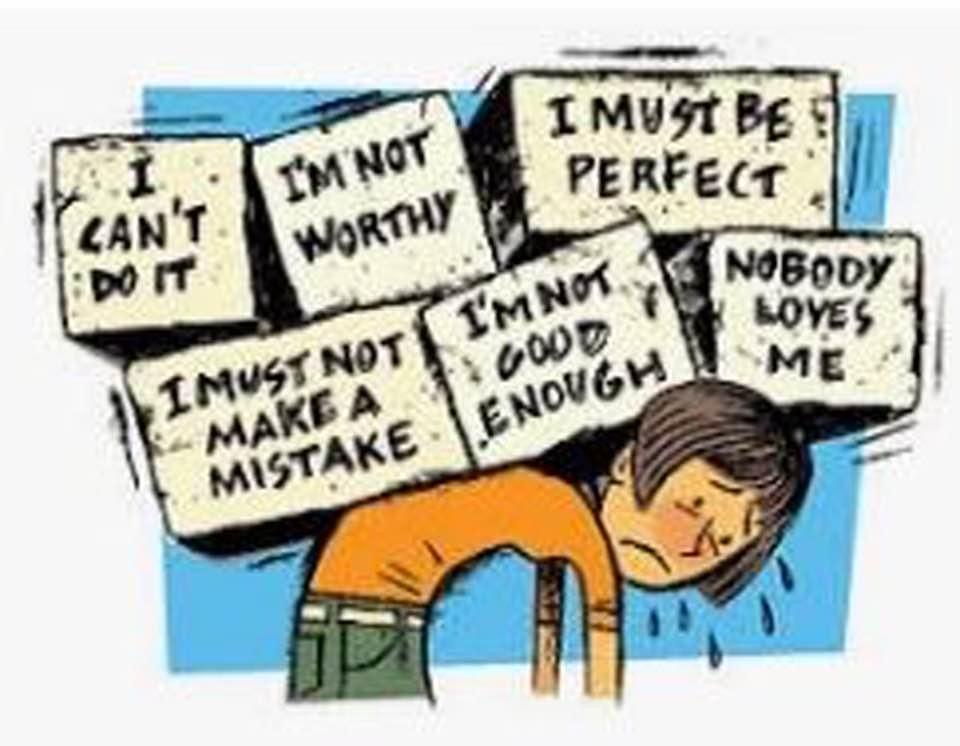
I just love A Course in Miracles (ACiM), and I thought these passages from Lesson 135 might be useful for all of us “over-doers” and “over-thinkers.” These ideas help me to let go of my incessant planning, and rely on the “plans” of a power wiser than I am! 

My Summary of Lesson 135: “If I defend myself, I am attacked.” 
Our self-made plans are defenses to keep our body safe. We mistakenly believe that our body is our only reality, and if it is hurt, we cease to exist. So, we must constantly protect it through our own fear-driven efforts.

In truth, we are spiritthe body is merely a communication device while we’re on earth. In each moment, we can release our plans for bodily safety, and instead choose Love’s/God’s will.

Lesson 135: “If I defend myself, I am attacked.” (Excerpts)

 (If you wish, replace “God” “He” “Him” etc. with “Love” or your own name for a Higher Power.) 

What could you not accept, if you but knew that everything that happens, all events, past, present and to come, are gently planned by One Whose only purpose is your good? Perhaps you have misunderstood His plan, for He would never offer pain to you. But your defenses did not let you see His loving blessing shine in every step you ever took.

A healed mind does not plan. It carries out the plans that it receives through listening to wisdom that is not its own. It waits until it has been taught what should be done, and then proceeds to do it. It does not depend upon itself for anything except its adequacy to fulfill the plans assigned to it. It is secure in certainty that obstacles can not impede its progress to accomplishment of any goal that serves the greater plan established for the good of everyone.

Your present trust in Him is the defense that promises a future undisturbed, without a trace of sorrow, and with joy that constantly increases, as this life becomes a holy instant, set in time, but heeding only immortality. Let no defenses but your present trust direct the future, and this life becomes a meaningful encounter with the truth that only your defenses would conceal.

What Happens When We Release Our Defenses?

Without defenses, you become a light which Heaven gratefully acknowledges to be its own. And it will lead you on in ways appointed for your happiness according to the ancient plan, begun when time was born. Your followers will join their light with yours, and it will be increased until the world is lighted up with joy.

Nothing but that. If there are plans to make, you will be told of them. They may not be the plans you thought were needed, nor indeed the answers to the problems which you thought confronted you. But they are answers to another kind of question, which remains unanswered yet in need of answering until the Answer comes to you at last.

How Do I Present Myself to Spirit?

You give up nothing in these times today when, undefended, you present yourself to your Creator as you really are. He has remembered you. Now is the light of hope reborn in you, for now you come without defense, to learn the part for you within the plan of God. What little plans or magical beliefs can still have value, when you have received your function from the Voice for God Himself?

PLEASE TELL ME WHAT YOU THINK. DOES THIS RING TRUE FOR YOU? OR DO YOU SEE THINGS DIFFERENTLY?

gigi langer worry less now

Gigi Langer has been sober 35 years, and holds a PhD in Psychological Studies in Education from Stanford University. Formerly crowned the “Queen of Worry,” Gigi resigned her post many years ago and now lives happily in Florida with her husband, Peter and her cat Murphy.

My award-winning book, 50 Ways to Worry Less Now, describes how to reject the faulty thinking leading to addiction, dysfunctional relationships, perfectionism, and worry about loved ones. Check out the practical directions, personal stories, and other helpful growth tools. Amazon: 4.8 stars (Buy Discounted Paperback, e-book, OR audiobook HERE

worry less now gigi langer

Turn Your Character Flaws into Assets!

After solving my drinking problem, I was amazed to find equally damaging aspects within my own personality–low self-esteem, jealousy, perfectionism, and constant anxiety. 

I now think of these “character flaws” as survival strategies that helped me cope in the past, but no longer serve me in the present. For example, standing up for my own needs often brought on ridicule at home, so I became a people-pleaser and pretended everything was fine. Now, many years later, I no longer need to suppress my needs because I’ve learned to be honest and assertive in my relationships. 

To change this old, damaging pattern, I needed to discover the motivators underlying it: where had I been fearful, dishonest, resentful, or selfish? Often these motivators showed up in my self-talk as whispered lies. For instance, my fear might whisper, “Don’t speak up; if you do, he’ll get angry and leave.”  Dishonesty also played its part by denying my unpleasant feelings. (For more on Whispered Lies, see my book, 50 Ways to Worry Less Now – amzn.to/2RMx5m5). 

When I used therapy, the 12 steps, and other practices to dissolve my fears and dishonesty, I gained positive self-talk (Whispered Truths) such as, “I have the right to ask for what I desire.” As a result, my happiness and relationships benefited from my assertiveness and honesty.

Here I illustrate how each motivator (Fear, Dishonesty, Resentment, Selfishness) spawns whispered lies, character flaws, and negative consequences. But the story doesn’t end there! After choosing to let go of these patterns and humbly asking God to remove them, we find the healing of internal whispered truths and many benefits.

FEAR UNHEALED

  • Whispered Lies: “If I create conflict or speak up, people will leave me.”  “I must perform well to be loved.” “If I make a mistake, I’ll be abandoned.” 
  • Character Flaws: People-pleasing, Perfectionism, Fear of failure, Laziness, Doubt
  • Consequences: Victim mentality, Blaming others, Anxiety, Procrastination, Giving up

FEAR HEALED

  • Whispered Truths: “I have a right to ask for what I desire.” “I can be imperfect and still be worthy of love.” “My high standards improve my work when I also take good care of myself.”
  • Benefits: Assertiveness, Improved relationships, Courage, Serenity, Trust, Faith

DISHONESTY UNHEALED

  • Whispered Lies: “I have to be who people want me to be.” “If I can figure this out, I can keep my loved ones safe.” “I can’t be happy unless things change.”
  • Character Flaws: Codependency; Needing to control people, places, and things; Self-justification 
  • Consequences: Failed relationships, Trying to change others, Overthinking, Obsessing about the future, Lack of self-care, Anxiety, Denial of powerlessness

DISHONESTY HEALED

  • Whispered Truths: “I find the courage to take good care of myself.” “My higher power is in charge of my own and my loved ones’ security.” “I can’t change people, places or things, but I CAN change how I think and act.” “This is God’s job, not mine.” 
  • Benefits: Loving others with honesty, Moderation, Acceptance, Resiliency

RESENTMENT UNHEALED

  • Whispered Lies: “Nothing works out for me.” “Screw life!” “I’m not getting what I deserve.” “I hate him/her/it!”
  • Character Flaws: Negativity, Self-Pity, Intolerance, Impatience, Envy
  • Consequences: Gossip, Depression, Defensive in friendships, Distrust love, Anger 

RESENTMENT HEALED

  • Whispered Truths: “I have everything I need as God wills.” “Everything is in perfect order; I just can’t see it right now.” “This person is troubled just as I am; I see us both with compassion.” “All is well.”
  • Benefits: Acceptance, Gratitude, Forgiveness, Self-care, Humility (seeking God’s will), Generosity

SELFISHNESS UNHEALED

  • Whispered Lies: “She’s better than I am, so she’ll get all the attention I need.” “I’m better at this than she is, so I’m more worthy than she is.” “I must have this NOW!”
  • Character Flaws: Pride, Greed, Self-criticism, Judging others, Suspicion
  • Consequences: Relationship difficulties, Withholding love, Non-communication, Stress/anxiety, Rigid expectations of others (and of ourselves). 

SELFISHNESS HEALED

  • Whispered Truths: “I am an equal among equals.” “We’re all loved and loveable.” “We all share flaws; that’s okay.”
  • Benefits: Happy relationships, Generosity, Consideration of others, Acceptance 

*Note that each of the four motivators shows up to some extent in almost every flaw listed

HOW DO YOU IDENTIFY WITH THESE IDEAS? I’D LOVE TO HEAR FROM YOU!

Worry Less Now; Gigi Langer

Gigi Langer has been sober 35 years, and holds a PhD in Psychological Studies in Education from Stanford University. Formerly crowned the “Queen of Worry,” Gigi resigned her post many years ago and now lives happily in Florida with her husband, Peter and her cat Murphy.

Worry Less Now Cover

My award-winning book, 50 Ways to Worry Less Now, describes how to reject the faulty thinking leading to addiction, dysfunctional relationships, perfectionism, and worry about loved ones. Check out the practical directions, personal stories, and other helpful growth tools. Amazon: 4.8 stars (Buy Discounted Paperback, e-book, OR audiobook HERE)