Gigi Langer

Worry Less Now!

 Love More Now!

ACCEPTANCE IS THE ANSWER TO ALL OUR PROBLEMS

Let’s consider the idea of acceptance. How well has trying to control things worked for you? Do you believe you can change your loved ones? Or the fix world? 

You might be suffering with incessant regrets about the past, wishing you could change or fix it. Even worse, are you living in the wreckage of your future, constantly imagining how to avoid things like illness, poverty or loneliness?

All these pitfalls involve non-acceptance: the refusal to acknowledge how little control we have over other people, places, or things. In non-acceptance, we resist reality by immersing ourselves in fantasies, addictions, and other habits that shield us from the facts. This constant negative thinking keeps us in a loop of misery when our expectations aren’t met.

Acceptance

The only solution is acceptance: honestly admitting our own personal lack of power. As stated in The Big Book of Alcoholics Anonymous, Fourth Edition, page 417,

“Acceptance is the answer to all my problems today. When I am disturbed, it is because I find some person, place, thing or situation—some fact of my life—unacceptable to me, and I can find no serenity until I accept that person, place, thing or situation as being exactly the way it is supposed to be at this moment. . . . Unless I accept life completely on life’s terms, I cannot be happy. I need to concentrate not so much on what needs to be changed in the world as on what needs to be changed in me and my attitudes.”

An Example of Acceptance

Recently, my friend, Kayla, described her awakening to acceptance as “being hit by a pile of bricks.” Kayla had spent most of her adult years in a horrible, abusive relationship that was finally ending. She was struggling with codependency and began attending Twelve-Step meetings. Recently she began to work with a sponsor on Step One, admitting that a) we are powerless over the addiction of codependency, and that b) our lives have become unmanageable.

Reading about Step One and pondering the questions in her study guide, Kayla quickly came to see the truth: Her relationship was really over now, and her efforts to guarantee her happiness had failed. But it was not a happy insight; in fact, she had a few days of depression. Then she arose from her bed, free of the false illusions that had kept her trapped.

In short, with great courage, she threw in the towel and surrendered the fight. She was then ready to proceed to a new way of life with healthy others and a power greater than her codependence.

My Favorite Ways of Avoiding Acceptance

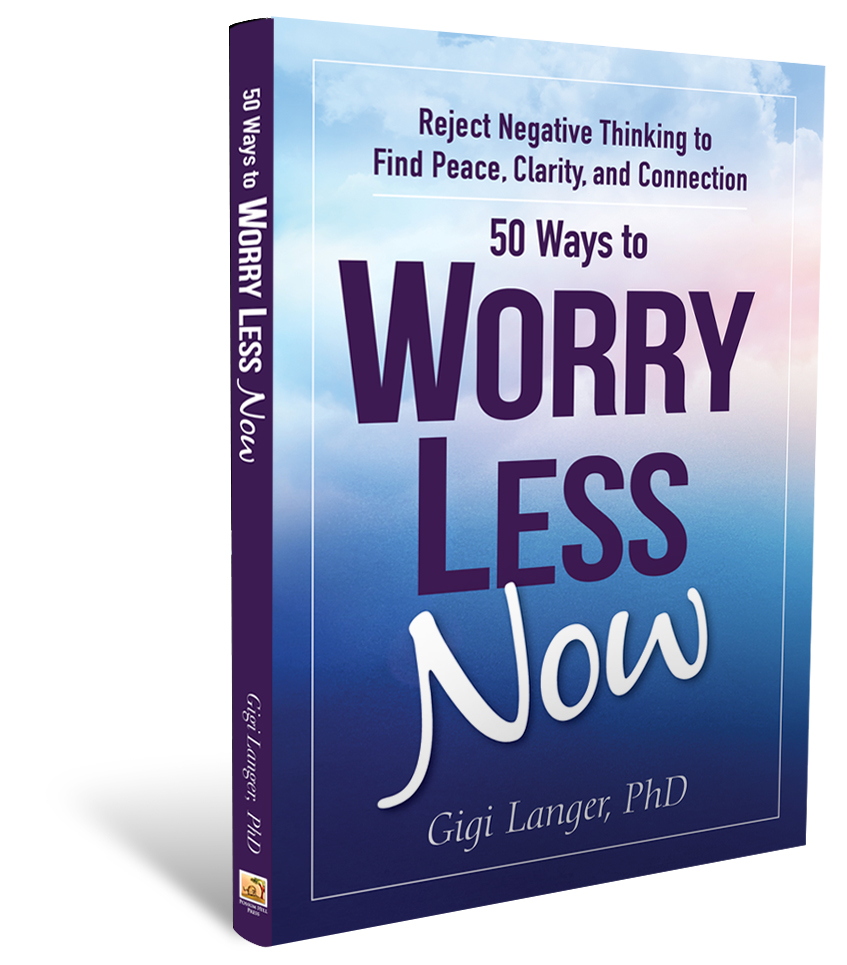
We all struggle with denial and non-acceptance from time to time. It helps to know the signs, so I can notice my shitty attitude and choose instead to accept life on life’s terms. Here are a few of my favorite avoidance strategies. My book, 50 Ways to Worry Less Now, offers many tools to come to acceptance and move on with our healing.

1. Trying to Figure It Out: “Why?” Is Not a Spiritual Question

Often my first defense against something I don’t like is to try to figure it out. For example, I try to analyze what I did, or what I should have done about the situation, with the (unrealistic) goal that I can change the past or manipulate the future. This is playing God, thinking that I should know why everything happens–totally impossible!

2. Judging and Resisting Things as They Are

Non-acceptance whispers to me that I know exactly how things should turn out, because other people are screwing up. If only they would listen to me, everything would be okay! Worse, my resistance tells me I can’t be happy unless I see this specific result. A sure dead-end.

3. Isolating in Denial

It’s only too easy to remain isolated without the care and guidance of healthy, honest friends. All alone, I can stay in denial, using my favorite ways of feelings-avoidance: food, TV, sex, or substances. When I open up honestly to another, I can find help to accept the truth and move on–hopefully with a structured program that builds in me a new way of living.  

What’s Your Experience with Acceptance?

Acceptance boils down to a humble admission that our thoughts and actions–especially those based on the desire to control–don’t always lead to the best results. It’s trusting that a power wiser than our own fearful mind might lead us to the best outcomes. We can then approach life without fighting it, judging it, or needing to control it. 

This step leaves us ready to find the solutions we’ve been seeking through a power greater than ourselves–the purpose of the remaining Twelve Steps.

I would love to hear from you! Please reply to glanger2202@gmail.com

gigi langer worry less now

Gigi Langer has been sober 35 years, and holds a PhD in Psychological Studies in Education from Stanford University. Formerly crowned the “Queen of Worry,” Gigi resigned her post many years ago and now lives happily in Florida with her husband, Peter and her cat Murphy.
worry less now gigi langer

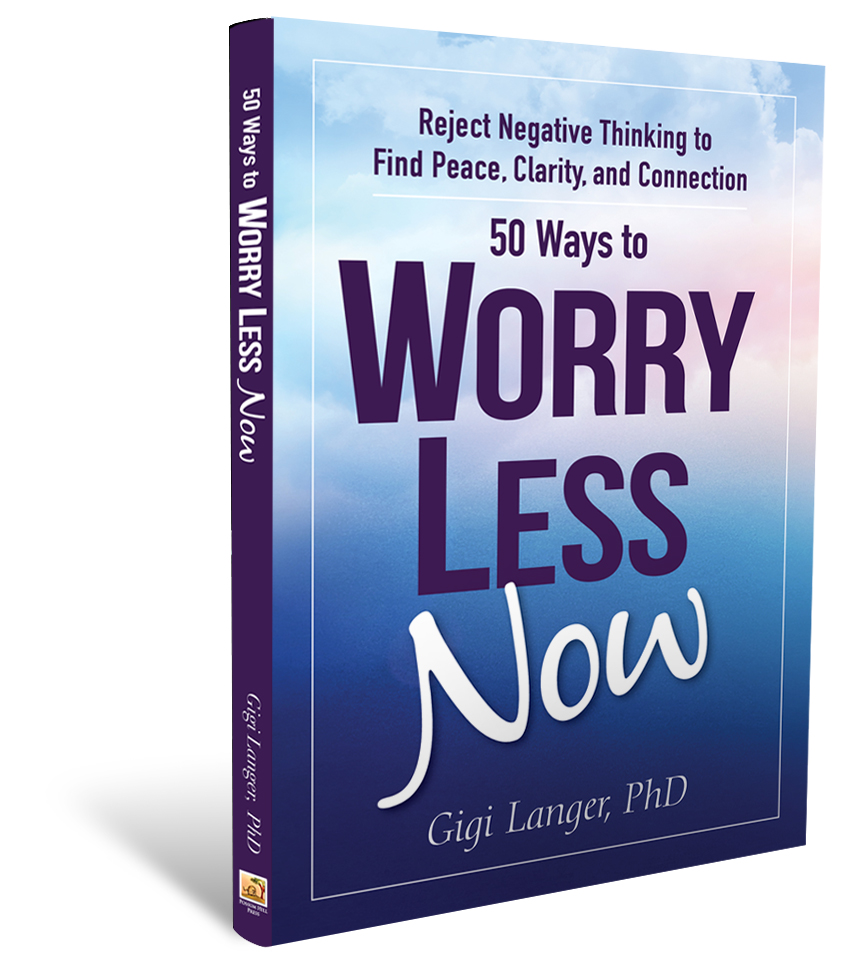
Gigi’s award-winning book, 50 Ways to Worry Less Now, describes how to correct the faulty thinking leading to addiction, dysfunctional relationships, perfectionism, and worry about loved ones. Check out the practical directions, personal stories, and other helpful growth tools. Amazon: 4.8 stars (Buy Discounted, personally signed Paperback with free Workbook PDF HERE)
DOES YOUR ATTITUDE NEED HEALING?

attitude healing worry less now gigi langer

This book about healing my attitude appeared at a low point in my life, and I am so grateful it did! Having moved to Michigan after grad school to marry my 3rd husband, I had no access to my favorite drug, marijuana.

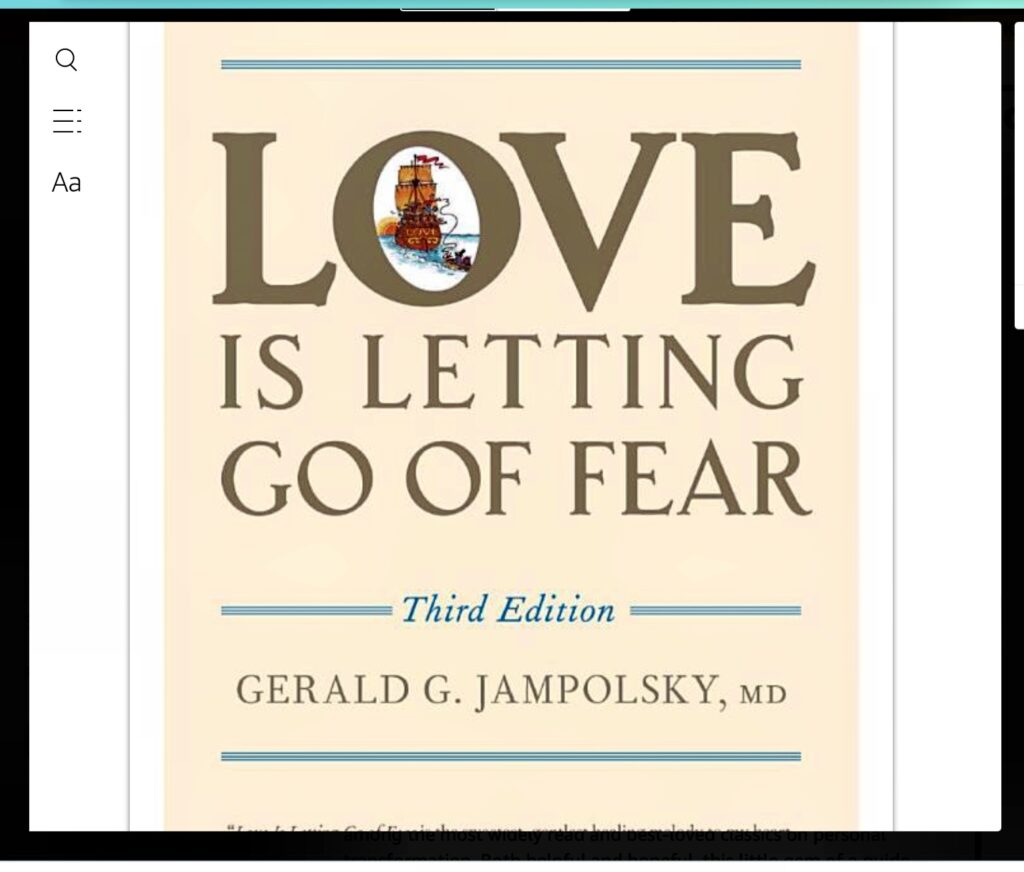
Since my husband travelled for work, I started sneaking out to bars to pick up men and get high. Just in time, my grad school mentor, Jane Stallings, sent me this book: Love is Letting Go of Fear, by the founder of the Center for Attitudinal Healing, Gerald Jampolsky, M.D. Filled with shame, I desperately grabbed onto it and began repeating the ideas, hoping that something could restore me to sanity.

To my astonishment, it did! Within a year, I began therapy, and soon entered recovery. I haven’t had a drink or drug for 37 years; and—miracle of miracles— I’ve been happily married to my 4th husband for 33 years! Doing the work to clean up our own negative attitude is totally worth it!

How Does It Work?

Attitudinal Healing provides support groups for people facing issues such as stress, aging, loneliness, divorce, chronic and life-threatening illness, care-giving of loved ones, bereavement, unemployment, or marriage and parenting problems.

The groups support inner growth, and help members adopt new ways to solve problems and relate to others. By applying the 12 Principles of Attitudinal Healing, one gains new attitudes so they can live in the present moment knowing that, no matter their life circumstances, they can choose to experience either peace or conflict, love or fear.

Principles of Attitudinal Healing

The Principles are not dogma. Spiritual in nature, they are nonsectarian and are offered only as tools for healing one’s attitude. The first Principle is the key: The Essence of Our Being Is Love, as it unites and flows through all the others.

  1. The essence of our being is love.
  2. Health is inner peace. Healing is letting go of fear.
  3. Giving and receiving are the same.
  4. We can let go of the past and of the future.
  5. Now is the only time there is, and each instant is for giving.
  6. We can learn to love ourselves and others by forgiving rather than judging.
  7. We can become love finders rather than fault finders.
  8. We can choose and direct ourselves to be peaceful inside regardless of what is happening outside.
  9. We are students and teachers to each other.
  10. We can focus on the whole of life rather than the fragments.
  11. Since love is eternal, death need not be viewed as fearful.
  12. We can always perceive ourselves and others as either extending love, or fearful and calling for love.

Where Have We See These ideas?

If you’ve you’re familiar with A Course in Miracles, or Twelve-Step programs, you might recognize some common attitudes or beliefs. for example, the importance of giving as a portal to receiving love. The following ideas might also resonate with your experiences.

  • We are spiritual beings having a human experience.
  • Healing and happiness are achieved by letting go of fear.
  • We grow so we can help others grow.
  • Letting go of resentments and criticism are keys to happiness.
  • Peace of mind is merely a choice, independent of external circumstances.
  • Now is the only moment we have, so we avoid living in the future or past.

In my experience, we come to live these truths through regular spiritual practice with love-based Christianity, Buddhism, or other wisdom traditions. I also attended the Attitudinal Healing Facilitator Training, and gained an even deeper understanding of how to apply the principles to live a worry-free life.

The point is to become a love-based person rather than a fear-based person, to give rather than take, and to care about others rather than criticize them. In short, we learn how to treat others as we wish they would treat us. Pretty simple, aye?

I WOULD LOVE TO HEAR FROM YOU! Which of these ideas do you find appealing? Which ones are confusing to you? Just email glanger2202@gmail.com and I will read your thoughts with care & reply.

In my next book (coming out in fall, 2022), I’ll be clarifying many of these ideas and sharing how to apply them to our lives. As writing a new book is such a challenge, I’ll be using many of the ideas stated here to keep a positive attitude. Stay tuned!

gigi langer worry less now

Gigi Langer has been sober 35 years, and holds a PhD in Psychological Studies in Education from Stanford University. Formerly crowned the “Queen of Worry,” Gigi resigned her post many years ago and now lives happily in Florida with her husband, Peter and her cat Murphy.

worry less now gigi langer

Gigi’s award-winning book, 50 Ways to Worry Less Now, describes how to correct the faulty thinking leading to addiction, dysfunctional relationships, perfectionism, and worry about loved ones. Check out the practical directions, personal stories, and other helpful growth tools. Amazon: 4.8 stars (Buy Discounted, personally signed Paperback with free Workbook PDF HERE)

Awakening to Your True Self

(An excerpt from my new book, due in September)

Gigi langer worry less now

At any moment, especially when we’re quiet (or when our hearts are breaking), we can receive such glimmers of truth shining into our being, reassuring us that we are whole and safe in this life. I am so thankful for discovering the strength of my true self in a world where my heart sometimes beats to the blinding force of fear.

Who is your true self? It’s the you who knows intuitively the next right thing to do, has healthy friends to consult, can feel the pain of life and heal it, and who brings love and service to those you encounter.

How do we grow away from our fearful self and into our true self? For the past 30 years, I’ve joined with many inspired mentors to apply the teachings of the Twelve Steps and A Course in Miracles (ACIM) to every aspect of my life. My experience, and that of millions of others, suggests that we can claim our true heart and life by:

  • Opening our hearts. We are here to move away from a life dominated by fear, defenses, and criticism toward a life of love, acceptance, and compassion.
  • Connecting our hearts. As we experience our internal state tipping from love to fear, we join with others to give and receive inspiration and care.

Following these two paths has healed my most troubling problems: codependency, sexual abuse, chronic pain, divorce, worry about loved ones, perfectionism, and job stress. Now I enjoy peace of mind and serenity, no matter my circumstances. I hope awakening to your true self will bring you similar benefits.

Worry Less Now; Gigi Langer

Gigi Langer, PhD has helped thousands of people improve their lives at home and at work. She’s written several books for educators, and is a sought-after speaker and workshop leader.  Gigi holds a doctorate in Psychology in Education,  and an MA in Psychology, both from Stanford.

WORRY LESS NOW GIGI LANGER

Gigi’s award-winning book, 50 Ways to Worry Less Now, describes how to correct the faulty thinking leading to addiction, dysfunctional relationships, perfectionism, and worry about loved ones. Check out the practical directions, personal stories, and other helpful growth tools. Amazon: 4.8 stars (Buy Discounted, personally signed Paperback with free Workbook PDF HERE)

THE PUNISHMENT OF PERFECTIONISM

Recently, I taught Session #2 of the Worry Less Now group of 10 wonderful women. During the session, I felt rushed and tense–possibly because I had planned too many things for the 75 minutes. So, I made some mistakes: I omitted the prayer at the beginning; and during our Masterminding, more than once I forgot a crucial step and one of the participants had to remind me.

Although I laughed about it at the time, afterwards, I felt ashamed due to my old flaw of perfectionism. The ego grabbed my mental microphone, whispering lies about how I had embarrassed myself. Then I tried to figure out why I had made the mistakes, in the false hope that I would never do so again. This self-punishment exhausted me, subtly draining my enthusiasm over the next few days.

By Sunday, I finally acknowledged the cloud over my head and my wise voice said, “We need some time to get our head straight. Noone can make me do a F!#*ing thing tomorrow.”

 I cleared my calendar, had coffee with my husband, and then lay down for a healing session with God. First, my kitty came and cuddled up on my lap (how does she know just when to appear?). I relaxed my body and breathed slowly as I imagined Mother Mary at my head, God on my left side, Jesus at my feet, and the Holy Spirit on my right side. As I said the Lord‘s prayer, their loving presence soothed my jagged feelings.

Then something surprising happened: several dark strands of false beliefs appeared to be lifted out of my body, dismantling my belief that I couldn’t be loved unless I was perfect.

Is It True? Is It Really True?

At the next session I had planned to talk about Byron Katie’s “The Work” and, as I lay in perfect peace, I had a great idea: I could illustrate the use of this tool with my  perfectionism’s whispered lie: “I should not make mistakes.” My answers to the four questions are:

  • Is It True? Yes
  • Is It Completely True? No.
  • What’s the Emotional Cost? I admitted how much pain and tension this belief had caused me,
  • What Could My Life Be without The Belief? I could relax in loving acceptance of myself when making mistakes.

Turnaround #1:  “I should not make mistakes” becomes “I should make mistakes.”

How is this statement as true or truer than the first one? Perhaps the pain of my mistakes made me humble enough to admit that I am not God; I’m only human, and mistakes have nothing to do with my security or lovability. It could also be true because it creates a teaching opportunity for my class and a chance to illustrate how I too get hung up by my ego.

Turnaround #2: “I should not make mistakes” becomes “They should not make mistakes.” How is this as true or truer that the original statement? I saw my ego in living color as I sat and criticized people on TV and social media. Then God showed me that since we are all connected, my judging others separates me from them and from God too. Hmm, not God’s will!

Then, this turnaround came into my receptive mind: “I should not make mistakes” became “God should not make mistakes.” Slowly, the tears began to flow; I can’t explain why, really; perhaps I thought that if God could make mistakes, then we were all screwed. I knew this could not be true, as God has been the only reliable source of love and safety in my life.

What Have I Learned?

So, what have I learned from doing “The Work” with my whispered lie, “I should not make mistakes,” and its corollary, “If I do, I can’t be loved.”

-By believing I must be perfect, I was “easing God out” and opening the door to self- condemnation, which is not God‘s will.

-Releasing that false belief allowed love to flow back into my heart, restoring my energy and connection with God.

-Turning the whispered lie around taught me that I cannot separate myself from God and others without causing myself misery.

-Finally, I believe my letting go of my false beliefs helps others do the same.  

I am so grateful that my spirits inspired me to write this, share it with my class, and perhaps include it in my new book. And most of all, I’m glad that God helped me shed another layer of perfectionism! 

gigi langer worry less now

Gigi Langer has been sober 35 years, and holds a PhD in Psychological Studies in Education from Stanford University. Formerly crowned the “Queen of Worry,” Gigi resigned her post many years ago and now lives happily in Florida with her husband, Peter and her cat Murphy.

My award-winning book, 50 Ways to Worry Less Now, describes how to reject the faulty thinking leading to addiction, dysfunctional relationships, perfectionism, and worry about loved ones. Check out the practical directions, personal stories, and other helpful growth tools. Amazon: 4.8 stars (Buy Discounted Paperback, e-book, OR audiobook HERE

worry less now gigi langer

WORRY LESS NOW PERFECTIONISM